Fighting antimicrobial resistance in India

A comprehensive resource on antimicrobial resistance. Understand the resistance challenge, and discover evidence-based solutions for combating AMR.
Rectangle 34624632Rectangle 240663612Rectangle 240663613Rectangle 34624635
Understanding AMR

What is antimicrobial resistance?

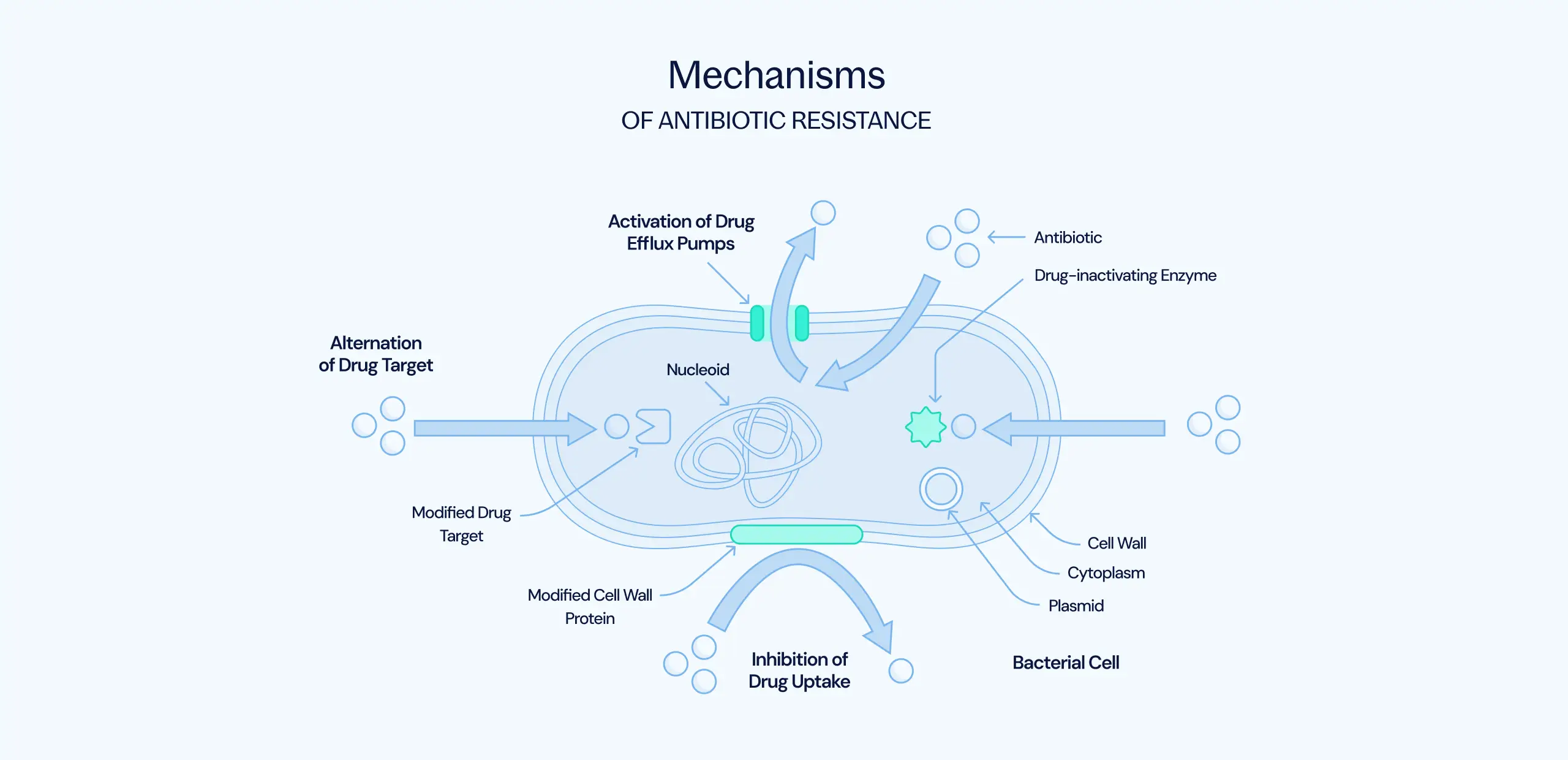
Antimicrobial resistance occurs when bacteria, viruses, fungi, and parasites evolve to survive by resisting agents (including antibiotics) designed to kill them. Infections become harder to treat, leading to prolonged illness, higher medical costs, and increased mortality.

What drives resistance

Overuse and misuse in human medicine
Inappropriate Pharmacy dispensing, incorrect dosing, compulsive prescription, and incomplete treatment courses accelerate resistance development
Agricultural and veterinary use
Routine antibiotic use in livestock and crop production creates resistance that spreads to humans
Poor infection prevention and control
Inadequate hospital hygiene and sanitation allow resistant pathogens to spread between patients
Inadequate sanitation and hygiene
Lack of clean water and proper waste management in communities enables resistance transmission
Lack of new antibiotic development
Pharmaceutical industry has largely abandoned antibiotic R&D due to the threat of resistance development, and poor commercial returns

LMICs - the epicenters of resistance

India also faces one of the world's most significant AMR burdens, driven by high infectious disease rates and complex healthcare challenges.
See the full picture

The full picture

300,000 deaths directly attributable to AMR (2019)
1 million deaths associated with AMR annually
58,000 newborn deaths from resistant sepsis
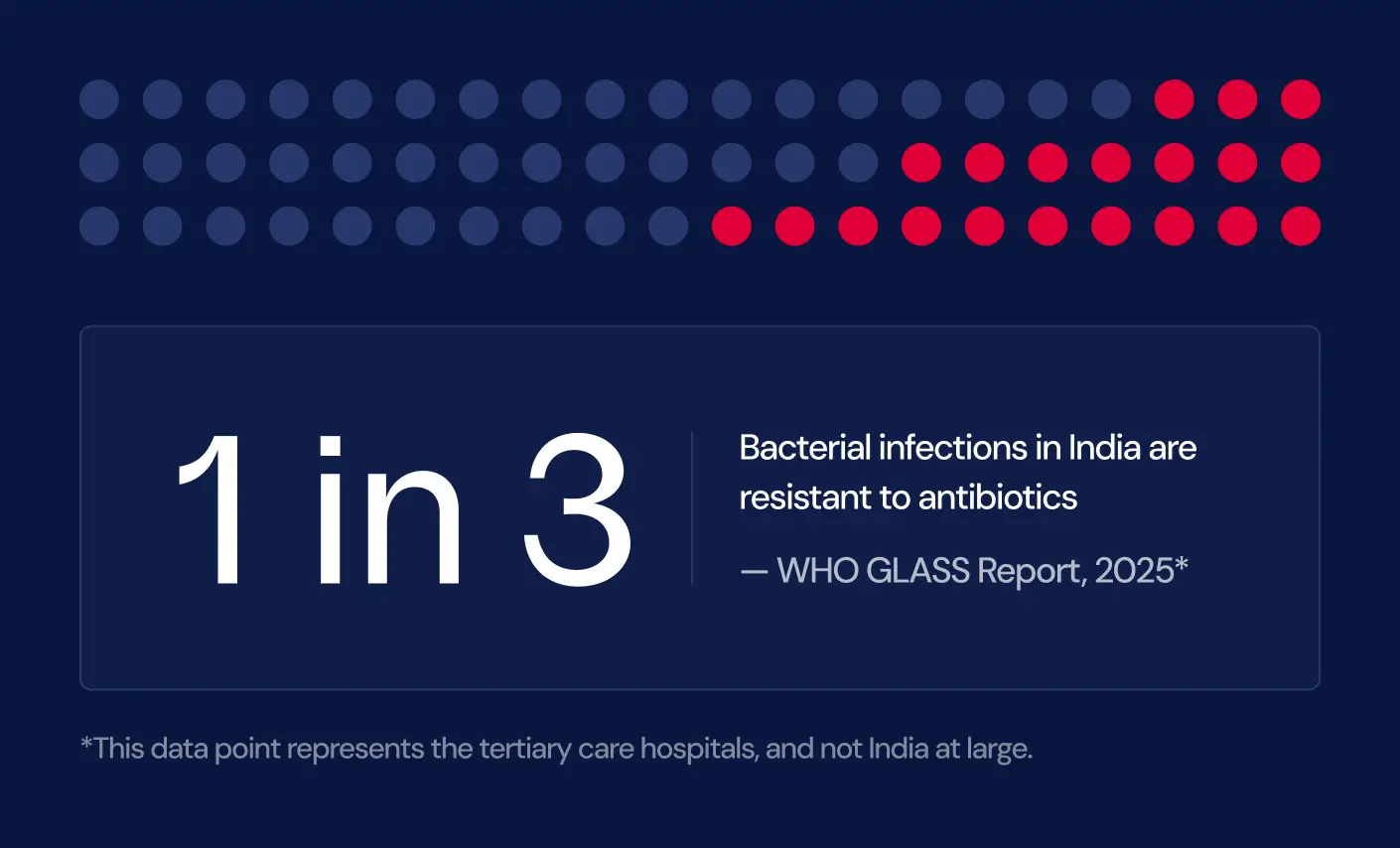
4 out of 10 ICU patients with infection have resistant bacteria
2-3 out of 10 overall patients face resistant infections
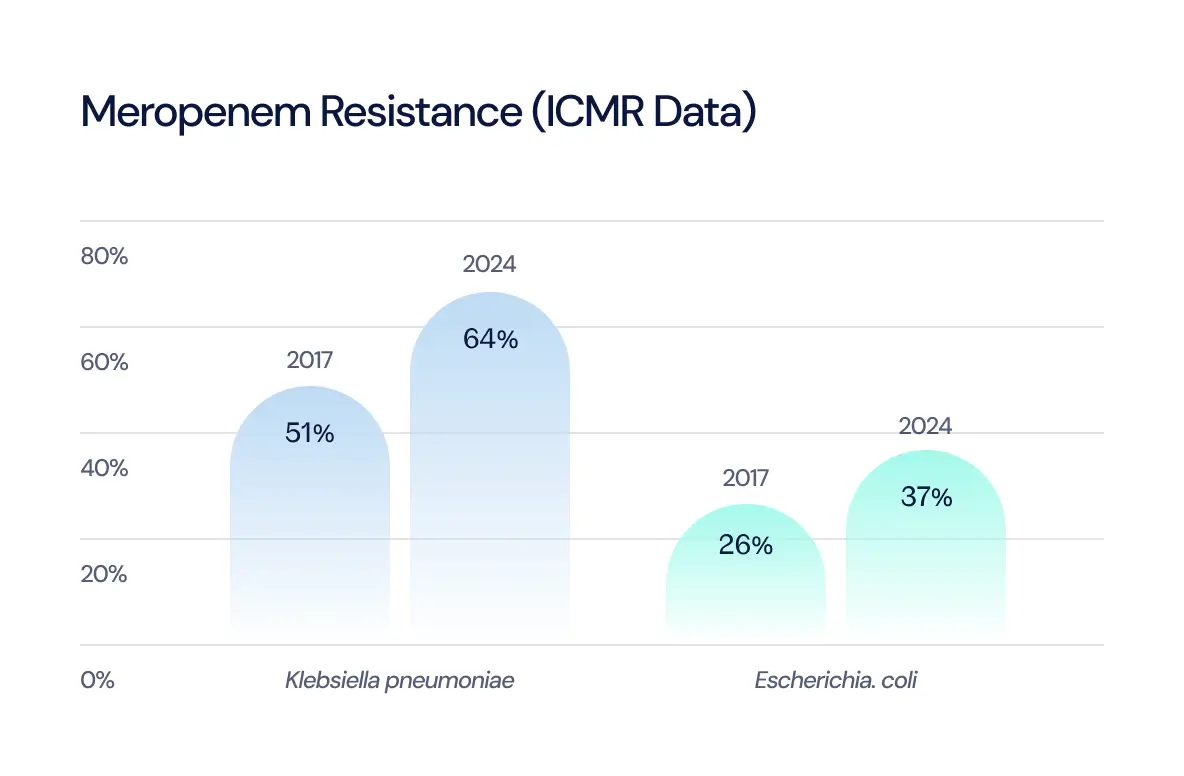
Last-resort drug already showing resistance
World's largest antibiotic consumer by volume
Inappropriate use accelerating resistance accross all settings including human, animal and environment sectors.
Complicated Care
High burden of resistant infections makes routine treatments increasingly difficult across all settings
Rising Healthcare Burden
AMR drives up mortality, length of stay, ICU utilization, and treatment costs
Last-Resort Failures
Cases resistant to last resort drugs are emerging—when all other antibiotics fail, no options remain

What's causing infections in Indian ICUs?

Gram-negative bacteria cause over 70% of all ICU infections.
Other pathogens
Acinetobacter baumannii
Other pathogens
Klebsiella pneumoniae
Pseudomonas aeruginosa
23.38%
21.88%
13.41%
11.13%
30.20%
* Based on ICMR-January 2024- December 2024 surveillance across Indian hospitals.

What historical data tells us

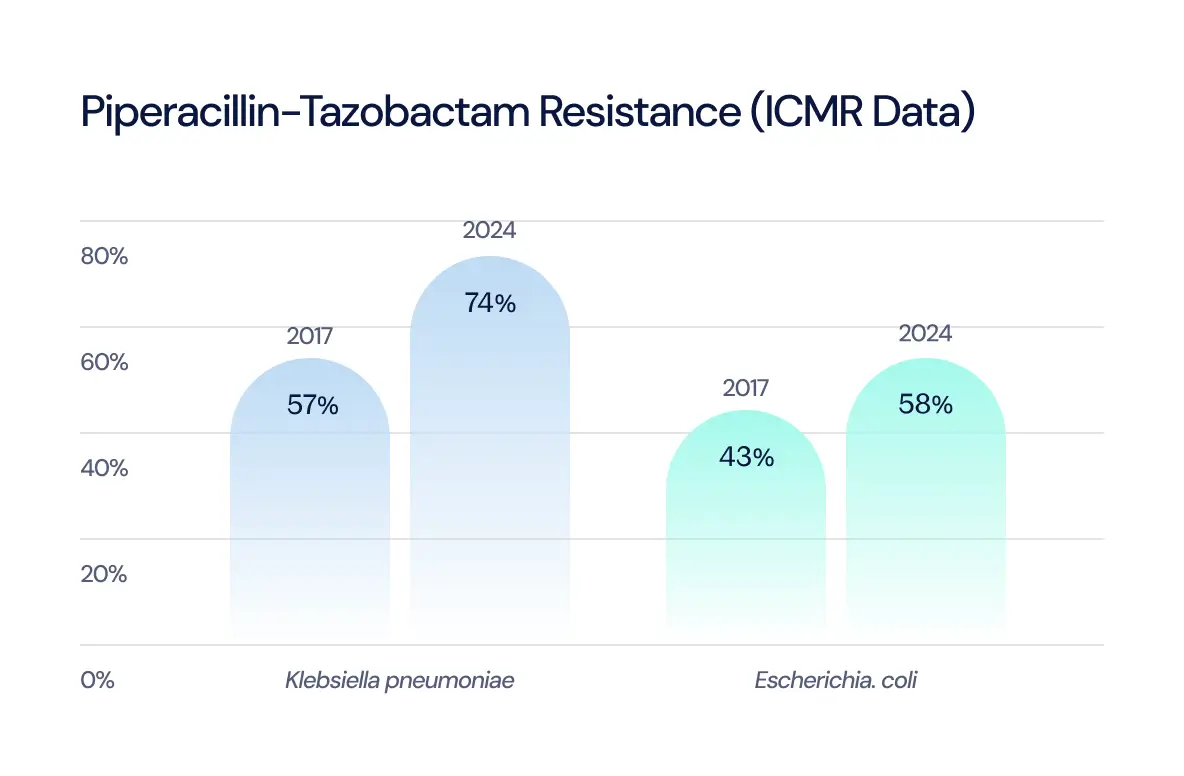
The widespread use of penicillins and cephalosporins in India has driven the emergence of ESBL and AmpC-producing Enterobacterales.
The Pattern
Overuse of legacy BL-BLI combinations drives resistance
Increased carbapenem reliance follows
Carbapenem-resistant Enterobacterales (CRE) prevalence grows
This trend underscores the urgent need for novel antimicrobials and judicious use of existing antibiotics.

Common questions about AMR

What is the difference between AMR and ABR?

Antimicrobial resistance (AMR) is broader—it includes resistance to antibiotics, antivirals, antifungals, and antiparasitics. Antibiotic resistance (ABR) specifically refers to bacteria.

Can AMR infections be treated?

Yes, but over time, options are becoming limited and expensive. Some infections require last-resort antibiotics or newer agents like ceftaroline. Pan-resistant infections may have no effective treatment.

Why aren't pharmaceutical companies developing new antibiotics?

Low financial returns on antibiotics compared to chronic/life-style disease drugs, plus antibiotics are used for short durations and reserved for serious infections, limiting market size.  Above this is the challenge of AMR evolution before monetization on investment.

What can hospitals do to combat AMR?

Implement antimicrobial stewardship programs (AMSPs), improve infection control, develop local antibiograms, and provide stewardship training for clinicians.

How does agriculture contribute to AMR?

Routine antibiotic use in livestock creates resistant bacteria that spread to humans through food, water, and environmental contamination.